A NOTE FROM CHRISTINE
The Meeting I Never Asked For
Relatives gathered in Migori to discuss the choices I had made. Years later, I still wonder why that meeting was necessary.
Before I returned from the UK, I was already exhausted.
Walter had been sending messages to me and my aunt, insisting that things had not been done properly. Protocol had not been followed. Dowry had not been paid. I had travelled without consulting him. According to him, these matters needed to be corrected.
What made his sudden concern difficult to understand was that we had barely spoken for nearly six years. Yet when he heard that I was relocating and had not involved him in the decision, he immediately wanted to be included.
By then, my ticket had been purchased and my visa had been issued. Everything was already in motion, but I wanted to leave peacefully.
Up until that point, he had never shown any interest in knowing where I lived. Once he learned that I was leaving, however, he demanded my address and insisted on visiting me before my departure. He invited himself and his family to my home.
At the time, I was living in South C. When he entered the house, he stood for a moment and looked around. I could only wonder what was going through his mind. Once everyone had settled in, I cooked for them.
As we ate and talked, he asked how much rent I paid and how I managed to afford it. The questions themselves were not unusual. What surprised me was how suddenly, and how late, this interest in my life had appeared.
A few days later, I visited the family in Embakasi. I hoped that making the effort might ease some of the tension and allow me to leave the country with a clearer mind. I already felt burdened by the messages and criticism. Perhaps rebuilding some rapport before my departure would make me feel less guilty about going.
The visit was awkward. We had not spoken properly in years, and now I was sitting in his house with very little to say. We watched television as time passed and eventually had dinner.
Afterwards, he began talking about the mistakes he believed I had made. I should have consulted him. I should not have arranged such an important move without involving him. The conversation went round in circles, returning to the same points repeatedly.
By eleven o’clock, I was beginning to wonder whether he expected me to spend the night. He was still talking, and there was no indication that the conversation would end soon. Before long, it was midnight.
I told him that I wanted to return to my house.
“You can sleep here,” he said.
I had not brought a change of clothes, and more importantly, I did not feel welcome enough to stay. I politely asked whether he could drive me home, but he declined and again suggested that I spend the night.
So I used the little money I had and took a taxi back to South C.
That evening revealed something I was not yet ready to accept. He wanted to be consulted, but that did not necessarily mean that he cared for me.
Looking back, I sometimes wonder whether making me feel guilty was the point. Perhaps he believed that if enough doubt was placed in my mind, I might reconsider the journey altogether.
I travelled anyway.
The circumstances that took me to the UK are told in Tough Luck. What happened after I returned, including the meeting at the centre of this story, never made it into the book.
The messages continued after I arrived. I was already dealing with a relationship that was not unfolding as I had imagined. Now I was also being told that perhaps everything was going wrong because I had left without receiving his blessing.
For a while, I believed it.
In many Kenyan families, the blessing of a parent or guardian is considered an important part of marriage. When a relationship fails after that blessing was not obtained, people may point to its absence as the reason. I had heard versions of this belief throughout my life, and during that uncertain period, it began to influence how I understood what was happening.
I wondered whether my future happiness depended on his approval. The thought followed me throughout my time abroad. I struggled to sleep, experienced frequent headaches and often took medication for migraines.
When I returned to Kenya two months later, the life I had imagined was gone. I had resigned from my job, given up my house and left believing that I was beginning a new chapter. Now I was back, trying to decide what came next.
That was when a bura was proposed.
In Luo, a bura is a meeting called to discuss and resolve a family matter. My aunt was expected to attend because she was the eldest in my mother’s family. My uncle and his wife were invited as well. Members of my mother’s family and relatives from his side were called to Migori. There would be approximately twenty people altogether.
My aunt refused to attend. She believed the meeting had no reasonable purpose. Why did twenty people need to travel to Migori to discuss the private decisions of one adult woman?
She was right.
At the time, however, I wished she had come. I knew I would be questioned in front of many people, and I wanted someone beside me. Looking back, I understand why she stayed away. Participating would have given legitimacy to something she did not believe should have been happening in the first place.
I considered refusing too, but I was still worried about the question of blessings. I thought that staying away might be interpreted as another act of disobedience and that, if my life did not go well, the decision would later be used as an explanation.
So I went.
The meeting took place in a newly built house in Migori, on land my mother and Walter had acquired together. She had once been excited about having a property where they could eventually build a home, although she did not live to see the completed house.
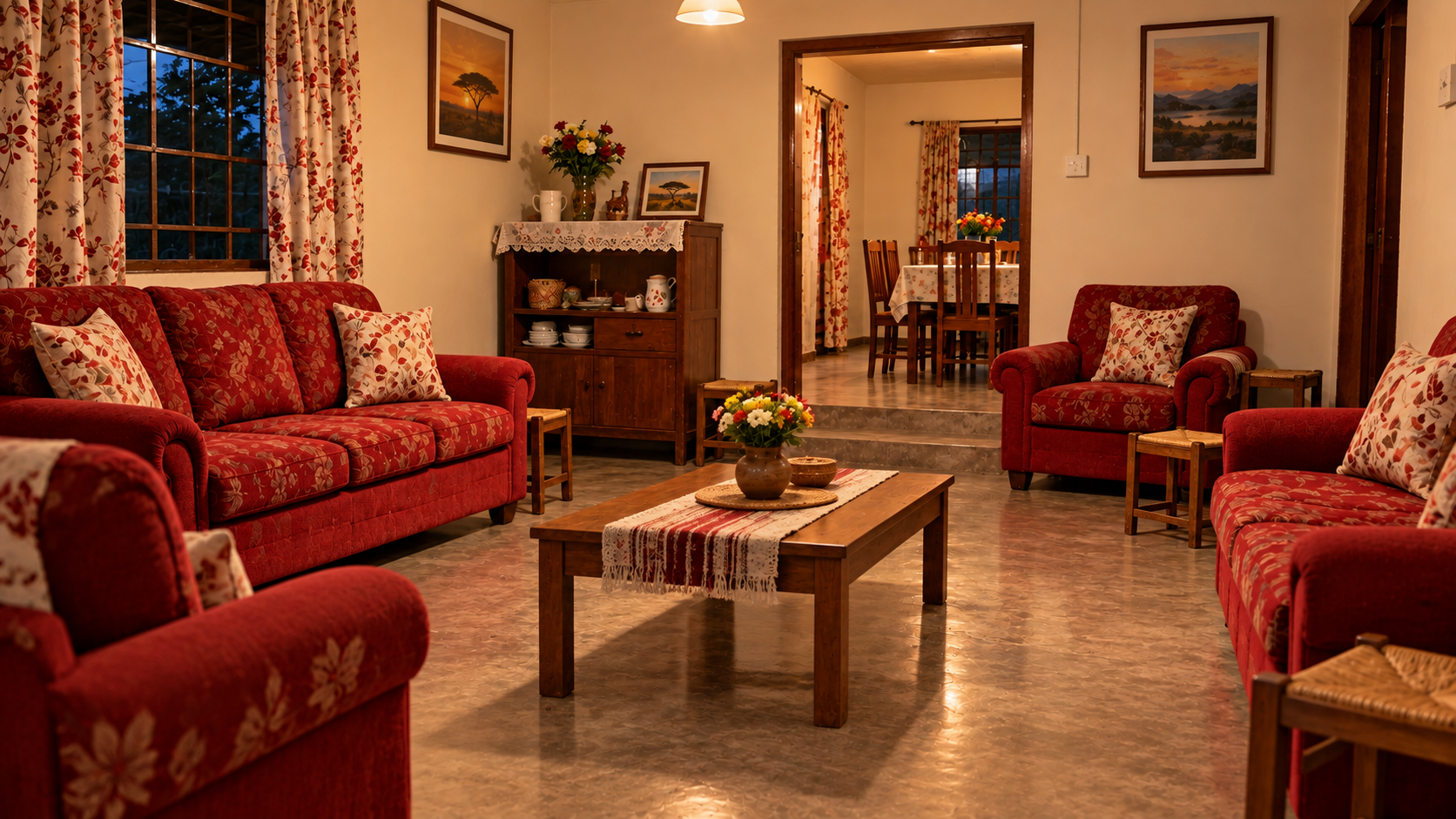
Food was prepared, and everyone gathered in the living room after supper. The sofas and chairs were arranged around the room. I sat near the door.
Walter stood and explained why he had called the meeting. He told everyone that I had returned from the UK. I no longer had my former job or the house I had lived in before leaving. The future I had travelled to pursue had not worked out, and in his view, I needed to be advised.
He also said that I had devalued myself by pursuing a relationship without following the proper process. Dowry had not been negotiated or paid, and I had not been formally released to leave and marry. By skipping those steps, he argued, I had diminished my own value.
I listened.
At the time, I wondered whether he was right. Perhaps I had made a mistake by keeping the details of my life private. Perhaps the only way to restore the value he said I had lost was to complete the process correctly.
I had always believed that some things were better allowed to develop quietly. I did not think every decision needed to be announced before it became real. Sitting in that room, however, I began to question whether my approach had been wrong.
When he finished, everyone else was given an opportunity to speak. Some said that he was the only father I had and that I needed to listen to him. Others appeared sympathetic. With several people, I could not tell what they thought.
Pamela, one of Walter’s relatives, was next to speak. She also advised me not to make such decisions alone. Then she turned to Jackie and said that Jackie had been wrong to enter a relationship with a man she knew was already married.
I cannot remember Pamela’s exact words, but I remember that she was one of the few people who acknowledged that the story had not begun with my journey abroad.
The meeting eventually ended, although we remained in Migori for a few more days. During that time, I went to my mother’s grave. I cried and asked her why she had left me. I asked her to give me a sign that everything would be all right and that she was still watching over me. I was struggling to make decisions and felt completely alone.
Staying in the house was complicated. Walter and Jackie were already married, and I was now under the same roof with the woman whose relationship with him I associated with a difficult period in my mother’s life. I kept those thoughts mostly to myself until it was time to return to Nairobi.
Afterwards, I decided to make another attempt at rebuilding the relationship. I visited Embakasi several times, hoping that consistency might create a way forward. Whenever we spoke, however, the conversation returned to the mistakes he believed I had made. The same points were repeated at length: I had left without consulting him, I had not followed the expected protocol, and I had returned after the future I had imagined did not work out.
There was rarely anything positive said about my life or what I might still build for myself. There was no practical conversation about how I could move forward. I was repeatedly being corrected, yet I could not identify what I had done that required such redemption. Rather than leaving with clarity, I often left feeling guilty and diminished, as though the life I had built held very little value.
On other occasions, he would leave shortly after I arrived, saying that he was not sure when he would return. If Brian or Beryl was home, I spent time with them. If neither was there, I remained in the house with only the house help until it was time to return to my place.
I continued making the journey to Embakasi because I wanted to rebuild the relationship, but the effort did not feel mutual. The visits gradually felt less like a natural connection and more like a task I had to complete. Eventually, I stopped going. I decided that what was meant to be would be, and that my happiness could not depend on someone else’s approval.
At the same time, I continued hearing about conversations taking place in my absence.
Brian, my stepbrother, told me that questions had been raised about my identity because I did not have a countryside home to return to. There were also discussions about where my dowry would eventually be paid and whether it would be accepted.
Brian and I may not share the same father, but he is my brother. I found it strange that such things were being discussed with him instead of being said directly to me.
Beryl also told me about comments made in the house. On one occasion, she said Jackie had claimed that my relationship in the UK ended because I could not have children.
The explanation was entirely invented. I had not been married, and nobody had asked me what had happened. Yet an answer had been created and circulated as though it were a fact.
There were comparisons too. I was told to look at the property Jackie owned and the car she drove. She was presented as someone who had already achieved more than I had.
What made the comparison particularly strange was that Walter had financed the very things he was praising her for having. I could not understand how those possessions could reasonably be used as evidence that I had accomplished less.
During this period, he offered me a place to stay in their home.
The words sounded generous, but the invitation did not feel compassionate. Something in his tone and body language made it feel like a reminder of how far I had fallen. It felt less like concern and more like: “Look at you now. You have nowhere to go, but I can still rescue you.”
I also knew that I could not live comfortably in a house where conversations about me were already taking place. I declined and stayed with my aunt instead.
From her house, I began putting my life back together.
I applied for jobs and other opportunities, including an international internship in Mumbai. When the opportunity came, I could not afford the flight, and my aunt in the UK paid for my ticket. Her help made it possible for me to go. While I was there, I secured another opportunity in Kenya and returned to take it up. Later that year, I submitted an application for a PhD at the University of Nairobi and another for a scholarship. The journey towards earning my doctorate is told more fully in Tough Luck. I also applied for a Barclays leadership programme, although that experience deserves a story of its own.
Gradually, doors began to open. Early the following year, I bought my first car, a Nissan Note, as a birthday gift to myself. Over the next three months, I continued buying furniture little by little. By April, I was ready to leave my aunt’s house and live independently again.
The question of why that meeting had been necessary has never left me.
The gathering had been presented as an attempt to advise and rescue me. Looking back, it felt less like help and more like an effort to expose me at one of the most uncertain moments of my life. Perhaps there were people in that room who genuinely wanted to guide me, but the meeting itself felt more malicious than restorative.
What I do know is that everyone had gathered to discuss what I had lost. Less than a year later, I was quietly building a life that would have given them something entirely different to talk about.
Leave a comment